



For this installment of The Abbot’s Edit, we’re exploring an integral, yet often under-appreciated part of a great pair: the Shoe Tree.
If you’re investing in a quality pair, we highly recommend buying accompanying shoe trees. Often overlooked, these foot shaped devices inserted into a shoe when not being worn are an essential tool in caring for quality footwear and keeping them comfortable. But beyond just preserving shape, they also help shoes age gracefully—and last far longer than they otherwise would.
One might have assumed that the creation of shoe trees followed closely after the shoes themselves, but in fact they’re a more recent invention, emerging in the late 1800s during the rise of ready-to-wear leather footwear, which became more widely available. Early shoe trees were simple—crafted from whatever wood was on hand—but by the 20th century, cedar had become the go-to for its light weight and anti-microbial properties as well as its aroma.
Whilst brands like Woodlore and Rochester popularised cedar models in America, English shoemakers like Cheaney & John Lobb offered lasted versions tailored to their specific shoe ranges.


In their most basic function, a shoe tree is designed to maintain a shoe’s shape when not being worn, and prevent it from permanently creasing or wrinkling after use. Shoe trees can help with:
Shape retention: As shoes dry, they can contract and develop creases that naturally occur in wear. A good shoe tree fills out the vamp and heel, minimizing unwanted wrinkling and collapsing.
Moisture absorption: A lesser known benefit is in helping shoes to dry. Leather and lining materials absorb moisture from your feet, which is particularly important with shoes worn without socks, such as loafers. High-quality cedar shoe trees wick that moisture away, reducing odour and softening long-term damage.
Aroma: Alongside wicking away moisture, wooden shoe trees like cedar can replace odours with a pleasant wood aroma that keep your shoes smelling fresh.
Longevity: Leather and suede as two primary examples, are natural materials that stretch, crease and dry out over time without proper care over time. Shoe trees help reduce cracking, distortion, and sole fatigue by maintaining the shoe’s intended structure.
Despite their unassuming appearance, not all shoe trees are made equal - and your own needs for your shoes are important in understanding which shoe trees are right for you:
Full Lasted Shoe Trees
These are shaped to mirror the original last of the shoe (meaning the original shape the shoe style was built around), therefore offering the most accurate fit. Often crafted from solid wood—typically cedar or beech—they provide excellent support across the toe box and heel. These are Ideal for specific high-end shoes but are less versatile for use with different pairs of shoes.
Split-Toe Shoe Trees
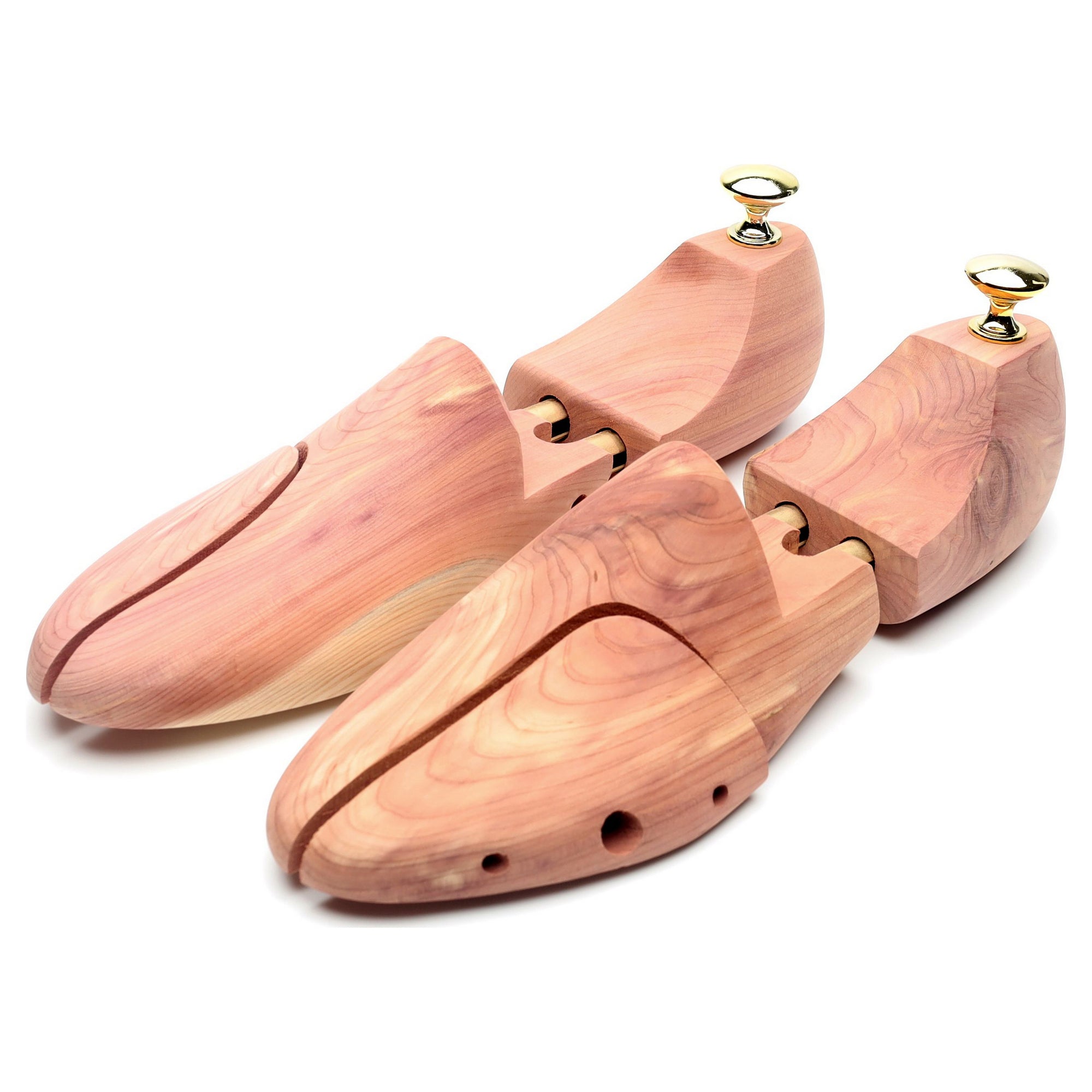
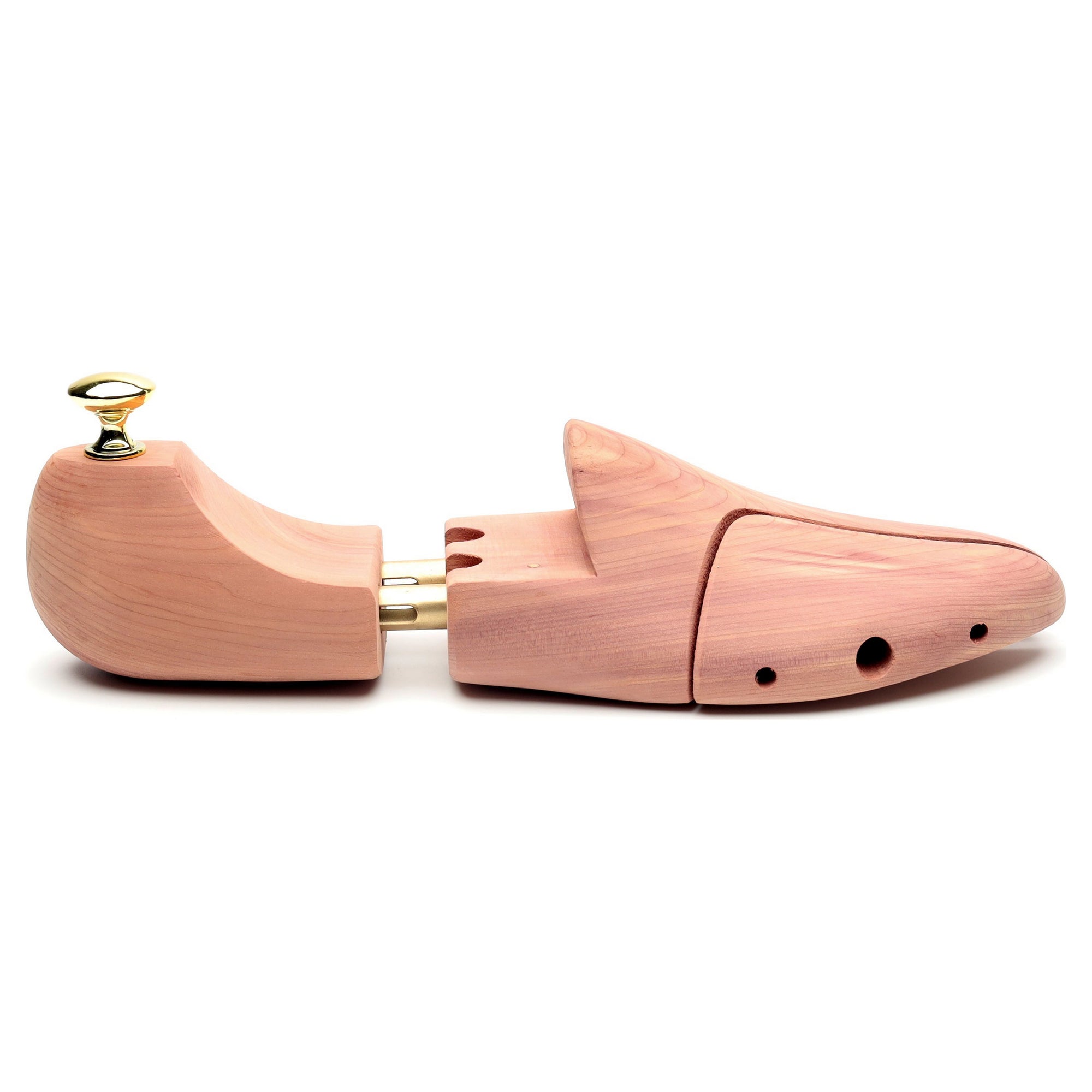
A flexible front mechanism allows the toe section to expand, accommodating a range of widths. Commonly found in cedar, they’re versatile and excellent for loafers and derbies alike.
Travel Shoe Trees
Usually made from plastic or hollowed wood, these are lightweight and compact. They offer a fraction of the support but are useful for maintaining shape on the go.
At Abbot’s, we recommend and stock split toecedar shoe trees - as they are adjustable, durable and cater to all last types.
The use of shoe trees is simple enough, but we have a few tips to keep your shoes looking their best:
How long should I leave my shoe trees in? With frequently worn shoes, we recommend leaving your shoe trees in overnight to provide enough time to preserve their shape. If the shoes have become wet, it’s best to leave them in for at least 24 hours to absorb all moisture.
Provided the trees fit comfortably within your shoes and aren’t over-stretching the material, there’s no limit on how long they can sit in a pair of shoes. To maintain their shape, shoes should be stored with shoe trees when not being worn for extended periods.
Which shoes can I use shoe trees with? You can use shoe trees with almost any formal footwear, from leather to suede (where moisture can be particularly damaging), derbies to brogues & even loafers.
Can I use shoe trees in trainers? Yes, they can provide the same benefits as they would with formal footwear and keep them smelling fresh.
Investing in a good pair of shoe trees is one of the easiest—and most effective—ways to extend the life of your shoes. Whether you’re preserving the everyday derbies you wear to work, or a treasured pair of handsewn loafers, a shoe tree can help extend the life of your shoes and look great for many more years.
At Abbot’s we’ve recently uploaded a large collection of shoe trees to the store from all of shoemaking’s finest brands, including Edward Green, Church’s, Crockett & Jones & many more. You can browse ourcollection of shoe trees below or click here to view our full range ofshoe care products.



In this edition of The Abbot's Edit, we explore why suede deserves a permanent place in your summer wardrobe, how to wear it well, and how a little care will keep it looking exceptional for years to come.

When it comes to fine footwear, the old adage "you get what you pay for" holds true, up to a point. But in the world of Goodyear-welted shoes, the relationship between price and quality isn't always linear. Whether you are starting your journey into traditionally made footwear or looking to expand your collection, understanding the price brackets of the shoemaking world is essential.
In this edition of The Abbot’s Edit, we break down what £300, £500, and £800 buys you on the high street, and how the "Abbot’s Advantage" allows you to step into a higher tier of luxury for a fraction of the cost.

In a world that buys quickly, it’s easy to forget that well-made shoes were never designed to be disposable. A good pair is built to last for years, moulding to your feet and improving with wear.
At Abbot’s Shoes, we believe repair is as important as craftsmanship itself. Understanding when and how to repair your shoes is one of the simplest ways to protect both your investment and the quality behind it.
In this edition of The Abbot’s Edit, we walk through the most common repairs that extend the life of your shoes, and when to consider them.


